Water Security Options Study
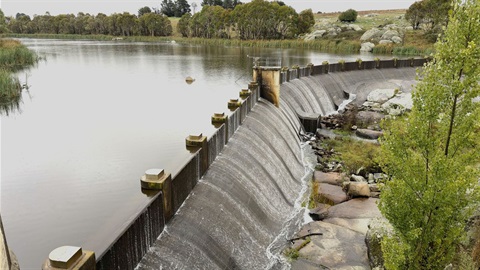
Planning for Uralla's water future
Following the 2019 drought, Uralla Shire Council and the local community have worked together to make long-term water security a priority for our Shire.
The drought highlighted just how important a safe and reliable water supply is to our homes, businesses and community. It also reinforced the need to look beyond short-term solutions and plan for the challenges of the future.
Since then, Council has continued investigating ways to strengthen Uralla’s water security, building on earlier studies, community feedback and technical investigations.
This work has now reached an important milestone, with NSW Public Works completing a Draft Water Security Options Study.
Our latest findings
The Draft Water Security Options Study brings together years of planning and investigation to assess potential options for strengthening Uralla's long-term water supply.
We now want to hear from our community about the options considered, their potential benefits and impacts, and what matters most to you as we plan for Uralla's water future.
Read about the four options, explore the draft study and share your feedback through Your Say Uralla!
Working together for water security
Finding a practical, long-term solution for Uralla's water supply has been a shared effort.
Council has listened to community concerns, gathered local knowledge and worked with water specialists and government agencies to better understand our water needs and the challenges ahead.
Together, this work has helped us build a clearer picture of the options available.
Over the years, we've investigated groundwater, water conservation, improvements to Kentucky Creek Dam, water quality and opportunities to share water resources with neighbouring communities.
These investigations have helped identify the opportunities and limitations of different approaches, providing the foundation for the latest Water Security Options Study.
Frequently Asked Questions
Why is Council looking at Uralla's water security?
A safe and reliable water supply is essential for homes, businesses and our community’s future. The 2019 drought highlighted the vulnerability of Uralla’s existing supply. Council has since been working with water specialists, government agencies and the community to investigate how to strengthen the system and prepare for future droughts. The study considers existing needs, future growth and the effects of a changing climate.
What is the Draft Water Security Options Study?
The study was prepared by NSW Public Works to assess options for improving Uralla’s long-term water security. It brings together earlier investigations and compares supply reliability, water quality, costs, environmental impacts and practical delivery considerations. It provides technical advice to support Council’s decisions; it does not approve a project or make the decision for Council.
What are the four options?
Option 1: A raw-water pipeline from Armidale to Kentucky Creek Dam, with water treated through Uralla’s treatment system.
Option 2: A treated drinking-water pipeline from Armidale directly to Uralla’s reservoirs.
Option 3: Desilting Kentucky Creek Dam and raising its wall by one metre.
Option 4: Raising Kentucky Creek Dam’s wall by two metres. The study also considers demand-management measures, such as reducing leaks and improving water efficiency.
Why were only these four options assessed in detail?
NSW Public Works reviewed earlier investigations, including the Catchment Studies to Support the Exploration of Options for a Sustainable Water Supply for Uralla Shire and Uralla Shire Water Blueprint (March 2022), the Kentucky Creek Dam Catchment Sediment Control Strategy (January 2024), a survey of the dam’s storage and sediment accumulation (January 2025), and groundwater investigations. The options reviewed included rainwater tanks, groundwater, water recycling, stormwater harvesting, desilting, dam raising, a new downstream dam wall and regional pipelines. These were considered against technical feasibility, regulatory requirements, cost effectiveness and their ability to address the supply shortfall. Some were incorporated; others were not progressed because of feasibility constraints or investigations outside the study’s scope.
What did the study recommend?
NSW Public Works ranked Option 2—a treated drinking-water pipeline from Armidale—highest following its assessment. It offered the strongest overall combination of water quality, supply reliability, assessed whole-of-life costs and deliverability. The recommended approach also includes ongoing demand management and continued investigation of groundwater as a contingency supply.
Does this mean Council has decided to build a pipeline?
No. The study’s recommendation does not constitute approval to construct a pipeline. Council will consider the technical findings, community feedback, funding and other relevant matters before deciding its next steps. Supporting further investigation and planning allows the regional option to be assessed without committing Council to construction. Any major infrastructure proposal would need to satisfy the applicable planning, environmental and other approval requirements.
Why is Council seeking feedback, and what should I comment on?
The technical assessment provides important information, but Council also wants to understand the community’s views on the benefits, disadvantages and impacts of the four options. You can comment on water quality, reliability, costs, environmental impacts, or effects on residents, businesses and landholders. Local knowledge and practical information are also welcome. You can comment on one option or several, and you do not need technical expertise or a preferred option to make a submission.
Is this a vote on which option Council should choose?
No. The consultation is not a vote. Council will consider the matters raised in submissions alongside the technical assessment, costs, funding, risks and other relevant information. The number of submissions supporting an option will not, by itself, determine the outcome.
Can I suggest another option?
This consultation focuses on the four integrated options identified through NSW Public Works’ assessment. It is not seeking to develop a new list of options or repeat earlier investigations. Council welcomes feedback and local information relevant to the benefits, disadvantages and impacts of the assessed options. FAQ 4 explains the earlier investigations and how the shortlist was developed.
Why don’t we build a second dam?
The study considered constructing a new dam wall approximately 50–100 metres downstream of Kentucky Creek Dam. This would create a larger storage, but the assessment found it would flood substantially more surrounding private land than the dam-raising options. It was therefore not progressed for detailed assessment. This assessment relates specifically to a new wall downstream of the existing dam; it should not be interpreted as an assessment of every possible dam site elsewhere.
Why can’t we simply make Kentucky Creek Dam bigger?
Increasing the dam’s capacity is included in the shortlisted options. The study assessed raising the wall by one metre together with desilting, and raising it by two metres. However, raising the wall also increases upstream flooding impacts on private land and property access, and requires structural works and environmental assessment. These impacts, costs and water-supply benefits need to be considered together when comparing the options.
Would removing the silt solve our water security problem?
Removing sediment would recover storage capacity, but the study found that desilting alone would not provide enough reliable water to meet Uralla’s future needs. Recovering 75 million litres of storage was estimated to provide approximately 57 million litres of additional reliable supply each year under the adopted future climate assumptions. Desilting would also require careful management to protect water quality while the dam remains in use.
Why aren’t groundwater bores one of the four options?
Groundwater investigations have identified potential supplementary supplies. However, the study identifies unresolved matters including licensing, further water-quality testing, treatment requirements and the infrastructure needed to collect, store and deliver the water. Groundwater has therefore been treated as a potential emergency or contingency supply, rather than a confirmed replacement for Uralla’s main supply.
Could rainwater tanks, water conservation or recycled water solve the problem?
These measures can reduce demand on the town supply and form part of the study’s approach. They include reducing leaks, using water efficiently, collecting rainwater and investigating recycled water for suitable non-drinking uses. However, the study found that demand reduction alone would leave a substantial long-term supply shortfall. Additional reliable supply or increased storage is also needed.
Why is treated drinking water preferred over a raw water pipeline?
A treated drinking-water pipeline would deliver water directly to Uralla’s reservoirs, avoiding significant upgrades and renewal of Uralla’s existing treatment system. A raw-water pipeline would continue to rely on local treatment. The study’s costing for that option assumes replacement of Uralla’s treatment plant; this is a comparison assumption, rather than an approved replacement timetable. The treated-water option avoids those local treatment and operating costs, although Council would pay for treated water supplied from Armidale.
Does Armidale have enough water to supply Uralla during a severe drought?
The study’s assessment relies on the proposed Oaky Dam-to-Armidale pipeline being constructed. Based on the regional water-security assessment cited in the study, that project would provide additional reliable supply capacity that could be shared with Uralla over the 30-year planning period. A connection would still require agreement with Armidale Regional Council on available supply, service conditions and arrangements during drought.
Would a pipeline be Uralla’s main supply or only a drought backup?
The treated drinking-water pipeline has been assessed as supplying all of Uralla’s future town water demand directly to its reservoirs. It would be the main supply. The raw-water pipeline would supplement Kentucky Creek Dam when required, with water continuing to be treated through Uralla’s treatment system.
What happens if the pipeline breaks, power fails or Armidale introduces restrictions?
These matters would need to be addressed through detailed design, operating plans and a supply agreement with Armidale Regional Council. Uralla’s reservoirs would continue to provide local treated-water storage, but supply during an interruption would depend on storage levels and demand. Backup power, repair arrangements, contingency supplies and drought restrictions would need to be confirmed before the scheme commenced operation.
What would happen to Kentucky Creek Dam and Uralla’s treatment plant if a pipeline was selected?
This would depend on the pipeline selected. The raw-water option would supplement Kentucky Creek Dam and continue local treatment, requiring significant investment in treatment infrastructure. The treated drinking-water option would supply Uralla’s reservoirs directly. The study assumes the existing treatment plant and Kentucky Creek pumping station would no longer be used for normal supply, and includes avoided renewal and operating costs. The future use and management of the dam and associated infrastructure would require separate consideration, including contingency needs, transition arrangements and any decommissioning costs.
What do the cost estimates include, and what is excluded?
The study provides preliminary estimates to compare the options, including construction and ongoing costs, with allowances and assumptions that vary between options. These are not final project budgets or amounts Council has committed to spend. Further work would be needed to confirm design, land arrangements, approvals, commercial terms and other project costs. Costs excluded from the estimates would also need to be considered before Council makes an investment decision.
How would the options be funded, and what could this mean for water bills?
All four options involve construction and ongoing costs. Without government grants or other external contributions, the full cost would need to be met by customers of Council’s water service through water rates and charges. This includes construction, operation, maintenance and future asset renewal. Borrowing could spread construction costs over time, but customers would still need to fund repayments and interest. Government assistance would reduce their contribution. The study does not approve expenditure, establish a funding package or determine changes to water charges. Council would assess funding opportunities and customer impacts before committing to a project.
Who would own and operate the pipeline, and who would set the price of water?
Ownership, operation, maintenance responsibilities and the price paid for bulk water would need to be agreed with Armidale Regional Council. These arrangements would be separate from Council’s decisions about charges to Uralla water customers. The options study does not finalise those commercial or service arrangements.
Which communities and properties would benefit?
The four supply options are intended to improve security for customers connected to the Uralla town water-supply system. The study also assessed Bundarra and found that major supply augmentation was not required over the planning period, although continued monitoring and leakage management were recommended. The options do not automatically extend reticulated water to rural properties or other settlements. Any proposed extension would require separate consideration.
How long would the preferred option take to deliver, and what happens in the meantime?
A delivery date has not been established through this study. A project would require further development, funding, environmental assessment, approvals, design and construction. The Armidale Water Security Project, which includes the proposed Armidale-to-Uralla pipeline, has received Secretary’s Environmental Assessment Requirements (SEARs) from the NSW Department of Planning, Housing and Infrastructure. These set out the matters to be addressed in its Environmental Impact Statement; they do not approve construction. Pipeline delivery would also depend on associated regional infrastructure and agreements with Armidale Regional Council. In the meantime, Council would continue managing the existing supply, reducing water losses and progressing drought preparedness and contingency arrangements.
How can I have my say?
You can make a submission through the Your Say Uralla! website, by email or by post. You can comment on one or more options and provide relevant local information.
Can I speak to someone before making a submission?
Council is holding two community information sessions on 24 November 2026, where you can hear about the study and ask questions of Council representatives and technical specialists. The same information will be presented at each session:
12:30–2:30 pm and 4:30–6:30 pm, at Uralla Court House, 9A Hill Street, Uralla
You can attend in person or join online.
What happens after consultation closes?
Council will review submissions and consider the matters raised alongside the study’s findings, costs, funding, risks and other relevant information. This will inform decisions about the next steps, including any further investigations or project development required. Council will keep the community informed as the work progresses.
Where can I read the full study and earlier investigations?
The Draft Water Security Options Study and information about earlier water security investigations is available on the Your Say Uralla! site.